



By Ray Marden, CBET, CHTM
If you’re interviewing for an entry level HTM job you’ll likely get questions about electronics fundamentals early on. So be prepared to talk Ohm’s law. Then be sure to have a story or two in mind of things that have been challenging or that have stretched you in the past. A difficult situation that you resolved or a disappointing outcome that you learned a valuable lesson from will do. These types of questions are intended to identify and highlight your soft skills or lack thereof. Be prepared to speak about your intangible gifts indirectly. Show more than you tell. Speak truthfully, confidently, and casually about your skills and capacities. Have self-development and skill-development plans in place prior to the interview. This will help hiring managers see past any limitations and inexperience. This gives them a picture of where you see yourself in the future. Knowing who you are and what you want to learn and improve on will also boost your confidence and self-esteem.
On interview day, be ready to engage the employer. Don’t just play defense. You get to ask them tough questions too! It helps to have a few curveballs ready. This is also your chance to find out what they don’t want you to know. One of my favorites is, “Tell me why I wouldn’t want to work here. What do you complain to your friends and family about?” I used this one in my last interview. Beyond being revealing and important to my decision process, it’s refreshing to see the interviewer have to play a little defense. Asking them good questions lets you find out more about the job. It also shows that you are a great listener and buys you time to relax and take in information instead of searching for answers while bracing for the upcoming questions. The more they are responding to you, the better the interview is likely going in their mind. Remember we can all feel a little awkward around plain truth, but good leaders will appreciate it and will answer your tough questions honestly. It also demonstrates that you realize no situation is perfect, but aren’t naïve either.
If there are problems above your hiring manager, they will find their way to you. You know what they say about which direction stuff rolls! It’s much better to find out about organizational disfunction during the interview than after you start building relationships with everyone only to realize it’s a toxic culture.
Some hiring managers are desperate to fill a position, some even get bonuses for doing so and will actually try to sell you on the job. Be careful of this, if it seems too good to be true, it deserves deeper investigation before you buy in. Ask to see the shop and meet the team as soon as it feels appropriate.
This may become your permanent workplace so it helps to pay attention to how you feel in the setting. Track how you are feeling in your body throughout the process. Don’t talk yourself into a bad situation or spend too much time listing pros and cons. Deep down you know what you are looking for. While no place is perfect, some place will be a good fit for you.
If you can stay objective and open and pay attention to the situation around you and your feelings while engaging the process, you’ll get a pretty clear idea whether a place is a fit for you and your skills, ambitions, and limitations. Don’t be afraid to own your limitations but don’t keep highlighting them either.
Speak from your truth while keeping in mind that part of the interview is set up to see how you manage stress. Anticipate being stumped. Ask to come back to a question later if one trips you up. Own it, tell the interviewer that it was a great question and you need some time. Nobody wants pat answers, they want to see composure.
Try to remember that you have a body and that it needs air to perform properly. Allow yourself to breathe more deeply to keep it relaxed. I do this for days leading up to an interview to deal with the building pressure. Your body won’t win you a job but it can cost you one. Bodies under stress sweat, breathe rapidly and shallowly, fidget, and change demeanor. Try to breathe deeply through the entire interview especially if you start feeling your stress indicators. Often one person breathing consciously in a room will settle the whole room. You can be the peace, and space, and clarity in the room, even as a candidate. This is leadership in its simplest form and it is powerful.
You are trying to enter the HTM field, this means stressful situations will present themselves to you often. Try to find the joy and excitement in each challenge not just the fear and worry.
If you passed an HTM training program, you are a very smart and capable person. Every hiring manager knows this. So, who are you? That’s what you must demonstrate in an entry level interview. Unfortunately, you only get one hour or less to do this so make it count by being rested, fed, and prepared.

What is ‘company culture’ really about?
I’ve been hearing about “company culture” quite a bit these days, and about how important it is, especially within today’s challenging work environment.

How to Approach Political Conversations at Work
Political conversation is fraught with potential conflict. Guidelines and “safe words” are two things experts say can tame political discourse.

Seasoned Pros Navigate Challenge of Younger Bosses
How can people leverage their years of experience without offending their much-younger supervisor?

A BMET’s Quest for Quality from HTM Front Lines
How does a single technician help foster a culture of quality without pointing fingers or making unpleasant waves?

How to Respond to Rejection After a Good Job Interview
You have finished a job interview, feel you’ve done well and are anxiously awaiting an offer. And then you get the call/email/text/letter saying you haven’t been hired.

Should Grads Accept First Job Offer?
The question many students have: Should I take the first job offer that comes along – even if it isn’t exactly what I’m looking for? Here, career experts weigh in with their advice.

Should You Still Apply if You Don’t Meet All the Qualifications?
How important is the list of preferred qualifications most job listings include? If someone is lacking one or two of those qualifications, is it a waste of time to apply?

Personal Improvement Project: Soft-Skill Development
Industry experts agree, soft skills are key!
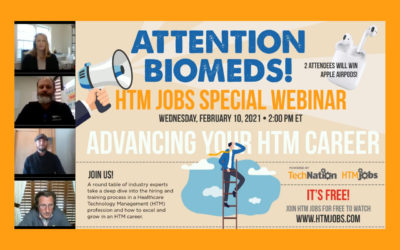
Webinar: Advancing Your HTM Career
Learn about the hiring and training process in a Healthcare Technology Management (HTM) profession and how to excel and grow in an HTM career.

Imposter Syndrome Antidotes
Un-checked feelings of unworthiness and thoughts of doubt can grow into what is commonly known as imposter syndrome.
