



By Kathleen Licht and Chelsea Schoen
For the past decade, the looming retirement crisis for BMETs has been at the forefront of the industry’s mind. It is apparent that there are multiple ways in which we need to recruit talent to sustain our field for the long term. Perhaps the key to attracting more people lies in the many different paths individuals can take to become a BMET.
Whether it be a career change, military training, or the traditional schooling route, one can find a place in this growing community of professional and skilled workers. In this article, we will discuss our unique paths to the field and offer our view on how to recruit and retain individuals in the future.
Traditional Career Path, Millennial
I took the “traditional” path to becoming a BMET. In my experience in high school, the standard expectation for the Millennial and Z Generations is to pursue a four-year degree. In this fashion, I began on this path by pursuing more traditional science degrees, then became aware of biomedical engineering technology via an advisor at Cincinnati State Technical College. In researching the field, I realized it was a perfect fit for my interest in a wide-range of sciences, enthusiasm for patient outcomes and the realization that I wanted to find a career that would have long-term growth opportunities and be continually stimulating.
– Kathleen Licht
Career-Changer
My change to a BMET career was a long journey that involved going back to school in my late twenties. I used to serve on the direct patient care side of the medical field as a State Tested Nurse Aide (STNA) who transitioned to become a phlebotomist/lab technician. My interest in the field was piqued when I interacted with BMETs in the lab where I worked. The decision to change my career was a difficult one and included thought into what the career field outlook was projected to be, diversity of the field and family considerations.
– Chelsea Schoen
Our paths crossed while pursing our BMET degree and we quickly developed support for each other. The excitement of the ever-evolving technology landscape of health care and innovations were the main attractors for both of us to the BMET field. As we reflect on our experience, we offer some suggestions on how biomed can continue to recruit and retain talented individuals into the field.
A Plethora of Possibilities – The options and titles that come with biomeds nowadays are as numerous as ever and show no signs of slowing. The diversity and pace of the field as well as the allure that your skills can be translated into a wide range of environments is enticing for career-changers and new BMETs alike. Crothall Healthcare, specifically, was appealing to us due to its progressiveness being ISO 13485:2016 Quality Management System certified. We knew that we would be working in a leading-edge organization and our work would match the requirements that OEM vendors have as well. This allowed us to gain a greater perspective of the field from hospital, to manufacturer and the evolving regulatory requirements in the industry.
Career Ladder and Staying Power – Due to the vast range of opportunities and translatable skills, the biomed field also attracts individuals through the promise of staying power. Biomed is a career that you can continue to grow in with or without formal training or advanced degrees. The push for professionalization from the field has also lead to a broader availability of certifications that can allow your job to feel brand new without leaving the field.
Community – The field has been cultivating a unique community that showcases its diversity in an inherently genuine way that reflects the field as a whole. The AAMI #IamHTM campaign has also showcased a wide range of individuals in many aspects of the field which allows those interested in biomed to gain a better understanding of the career and cast a broader net in recruitment.
Personal Considerations – Fulfillment in career, continuous learning and growth opportunities and family considerations are of utmost importance to professionals as they start in this career as well as during various aspects of their career.
Regardless of where someone may have started on their path to becoming a biomedical technician, there is a sense of belonging because we all share the same drive to create positive outcomes in health care. Our two paths represent just a fraction of the ways BMETs are coming into the field. We know that there are still many more paths to choose from as we grow in this field. Everyone’s path is different, but we are all a part of this growing and progressive community regardless of the path that led us here.
Kathleen Licht is a BMET Intern at Crothall/Compass One. Chelsea Schoen is a BMET Intern at Crothall/Compass One at the University of Cincinnati Medical Center.

Positive Thinking
In a career-sense, what does “think positively” actually mean? How does someone practice positive thinking?

What is ‘company culture’ really about?
I’ve been hearing about “company culture” quite a bit these days, and about how important it is, especially within today’s challenging work environment.

How to Approach Political Conversations at Work
Political conversation is fraught with potential conflict. Guidelines and “safe words” are two things experts say can tame political discourse.

Seasoned Pros Navigate Challenge of Younger Bosses
How can people leverage their years of experience without offending their much-younger supervisor?

A BMET’s Quest for Quality from HTM Front Lines
How does a single technician help foster a culture of quality without pointing fingers or making unpleasant waves?

How to Respond to Rejection After a Good Job Interview
You have finished a job interview, feel you’ve done well and are anxiously awaiting an offer. And then you get the call/email/text/letter saying you haven’t been hired.

Should Grads Accept First Job Offer?
The question many students have: Should I take the first job offer that comes along – even if it isn’t exactly what I’m looking for? Here, career experts weigh in with their advice.

Should You Still Apply if You Don’t Meet All the Qualifications?
How important is the list of preferred qualifications most job listings include? If someone is lacking one or two of those qualifications, is it a waste of time to apply?

Personal Improvement Project: Soft-Skill Development
Industry experts agree, soft skills are key!
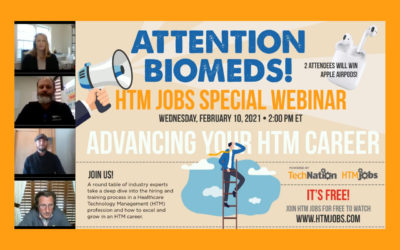
Webinar: Advancing Your HTM Career
Learn about the hiring and training process in a Healthcare Technology Management (HTM) profession and how to excel and grow in an HTM career.
